
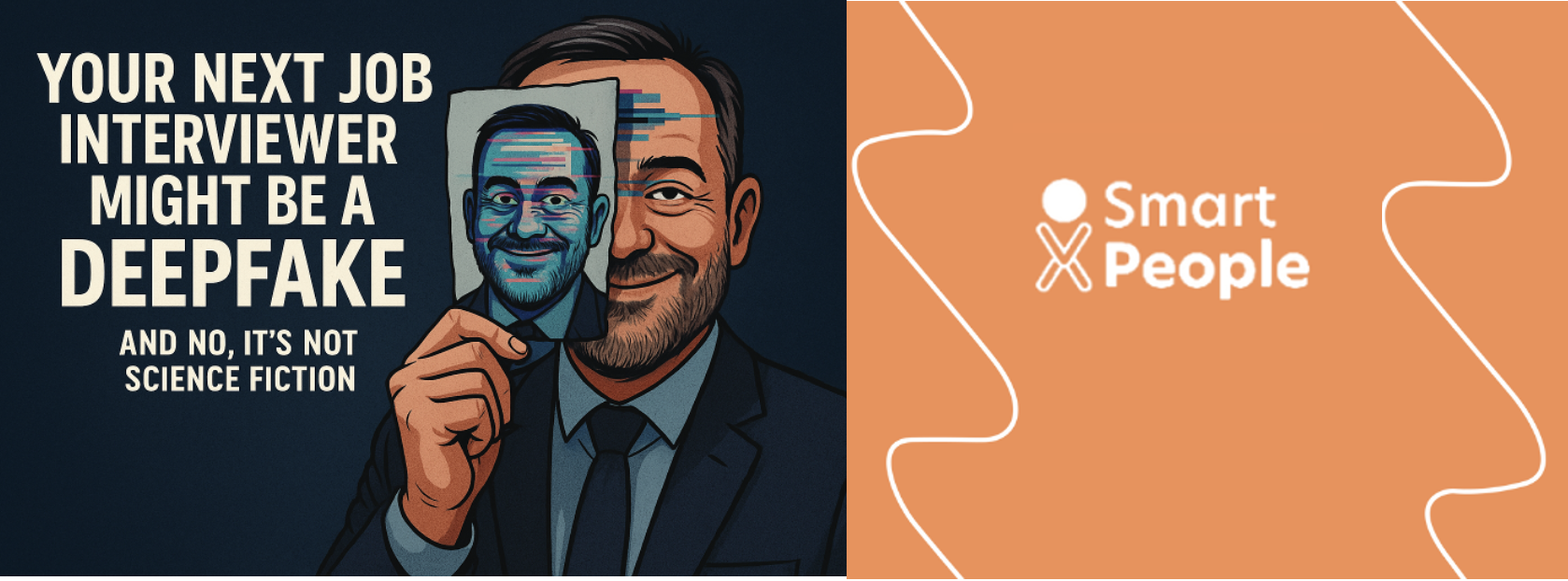
Author: Piotr Ławrynowicz
"The candidate was perfect. Flawless English, solid technical answers, impressive experience. We hired him immediately. One week later, we discovered he didn't exist".
This is the account of one of the worst recruitment nightmares of 2025.
The Story That Sounded Like a Joke – But Turned Out to Be True
Last month, a colleague from the cybersecurity department at one of the tech companies in Europe shared a story that initially sounded like a joke. Unfortunately, it turned out to be true:
Welcome to 2025, where your biggest recruitment challenge isn't finding good candidates – it's proving they're real.
The Numbers Are Terrifying
Based on industry reports analysis:
- Authentication failures in remote hiring increased 180% (Security Boulevard, 2024)
- Video interview anomalies detected in 12% of screenings (Personio analysis)
- Identity verification requests up 240% year-over-year across major platforms
Here's the math that should terrify every CFO:
- Average senior developer salary: €6,500/month
- Onboarding costs: €8,000
- Lost recruitment time: €12,000
- Project delays: €15,000
That's not a typo. It's basic operational math.
That's not a typo. It's not science fiction. It's happening right now.
How We Got Here (The Perfect Storm)
Let's be clear: this wasn't inevitable, it was predictable.
The convergence happened fast:
- Deepfake technology became consumer-grade (€50/month subscription)
- Remote work normalized video-only interviews
- AI voice cloning reached real-time capability
- Identity verification remained stuck in 2015
Result: The cost of creating fake candidates dropped 95% while detection methods stayed static.
The Anatomy of a Perfect Crime
Let me walk you through a real case from our client files (anonymized, obviously):
Target: Senior Software Developer, €80K salary, full remote
Method: Sophisticated multi-layered deception
Phase 1: Profile Creation
- AI-generated LinkedIn profile with 500+ connections
- Synthetic work history spanning 8 years
- GitHub account with AI-written code commits
- Professional headshots created by deepfake generator
Phase 2: Application Process
- Resume perfectly tailored by ChatGPT to job requirements
- Cover letter that hit every keyword and pain point
- Reference letters from "former colleagues" (also AI-generated)
Phase 3: Interview Process
- Video interviews using real-time deepfake technology
- Voice responses generated by advanced AI with personality modeling
- Technical questions answered by AI with access to coding databases
- "Connection issues" conveniently covered any glitches
Phase 4: The Con
- Signed contract using synthetic identity
- First week "worked" by AI responding to emails and Slack
- Submitted AI-generated code that passed initial review
- Disappeared when in-person meeting was scheduled
Red Flags Your HR Team Needs to Know
Based on our analysis of confirmed deepfake cases, here are the warning signs:
During Video Interviews:
- Unnaturally consistent lighting on face despite head movement
- Lip-sync delays of more than 200ms consistently
- Facial expressions that don't match emotional content
- Background inconsistencies between different interview rounds
- Audio quality that's suspiciously perfect with zero ambient noise
Behavioral Red Flags:
- Reluctance to turn camera on immediately when asked
- Preference for specific video platforms (some work better with deepfake tech)
- Avoiding spontaneous questions outside prepared topics
- Perfect answers that sound too polished for improvised responses
- Inability to show physical documents during interview
Technical Red Flags:
- Metadata inconsistencies in submitted files
- Writing style analysis showing multiple authorship patterns
- Social media footprint that's too perfect or recently created
- Reference contacts that only communicate via email/text
The €2.5 Million Question: Prevention vs Detection
Here's the CFO math that matters:
3-Level Verification Framework:
Level 1 (Basic Protection): €2,000/year
- Live video verification with movement requests
- Document authentication via blockchain
- Multi-platform identity cross-checking
Level 2 (Standard Protection): €8,000/year
Everything from Level 1, plus:
- Biometric identity verification platforms
- AI detection software for video analysis
- Comprehensive background screening
Level 3 (Enterprise Protection): €15,000/year
Everything from Level 2, plus:
- In-person verification for final stage
- Professional investigation services
- Continuous authentication during probation
ROI calculation: Preventing one false hire (€41,500) = 3-4 years of Level 2 protection costs.
The math is brutal. You can't afford NOT to invest in verification.
What Smart Companies Are Doing Now
Stop debating whether this is real. Start implementing verification.
Immediate actions (this week):
- Institute live video verification with spontaneous movement requests
- Require document authentication during interviews
- Cross-check candidate identity across multiple platforms
- Train HR teams on deepfake detection signs
Medium-term upgrades (next quarter):
- Deploy biometric identity verification platforms
- Implement AI detection software for video analysis
- Establish multi-stage interview processes with different interviewers
Enterprise-level protection (for high-risk roles):
- Mandate in-person verification for final candidates
- Employ professional investigation services for senior hires
- Implement continuous authentication during probation periods
The Compliance Nightmare You Haven't Thought About
Here's what legal teams are discovering: hiring non-existent employees creates massive compliance issues:
- Tax obligations for phantom employees
- Data protection violations if fake identities access systems
- Insurance liability if deepfake employees cause damage
- Regulatory reporting issues in regulated industries
One client in financial services faced a €200,000 fine when regulators discovered they had "employed" an AI-generated persona with access to customer data for three weeks.
The Future Is Already Here
Don't ask: "Will deepfake recruitment become a problem?"
Ask: "How quickly can I implement verification systems before I hire my first ghost employee?"
Because while you're debating whether this is real, companies with proper verification are already:
- Reducing false hire risk by 94%
- Cutting recruitment verification time by 60%
- Eliminating identity-related compliance issues
The new recruitment reality:
- Every video interview needs verification protocols
- Every background check must include identity confirmation
- Every hire should assume potential deception until proven otherwise
This isn't paranoia. It's operational necessity.
Bottom Line: Trust, But Verify Everything
Let's be clear: AI isn't the villain here. Poor verification processes are.
We're entering an era where the most dangerous candidates are the ones who don't exist.
The new recruitment math:
- Verification cost: €2,000-€15,000/year depending on risk level
- False hire cost: €41,500 per incident
- Break-even point: Prevent one ghost hire every 3-4 years
Implementation priority:
- Week 1: Basic verification protocols
- Month 1: Staff training on detection methods
- Quarter 1: Advanced verification systems deployment
This isn't about being paranoid. It's about being prepared.
DM or email: piotr.lawrynowicz@smartpeople.com.pl
GDPR Consent
By submitting this contact form, I consent to the processing of my personal data by Smart People for the purpose of responding to my inquiry, in accordance with the principles set out in the Privacy Policy and pursuant to Regulation (EU) 2016/679 (GDPR). Providing my data is voluntary, but necessary for this purpose. I have been informed of my rights to access, rectify, and request the cessation of processing of my data.