
Author: Zofia Pisańska
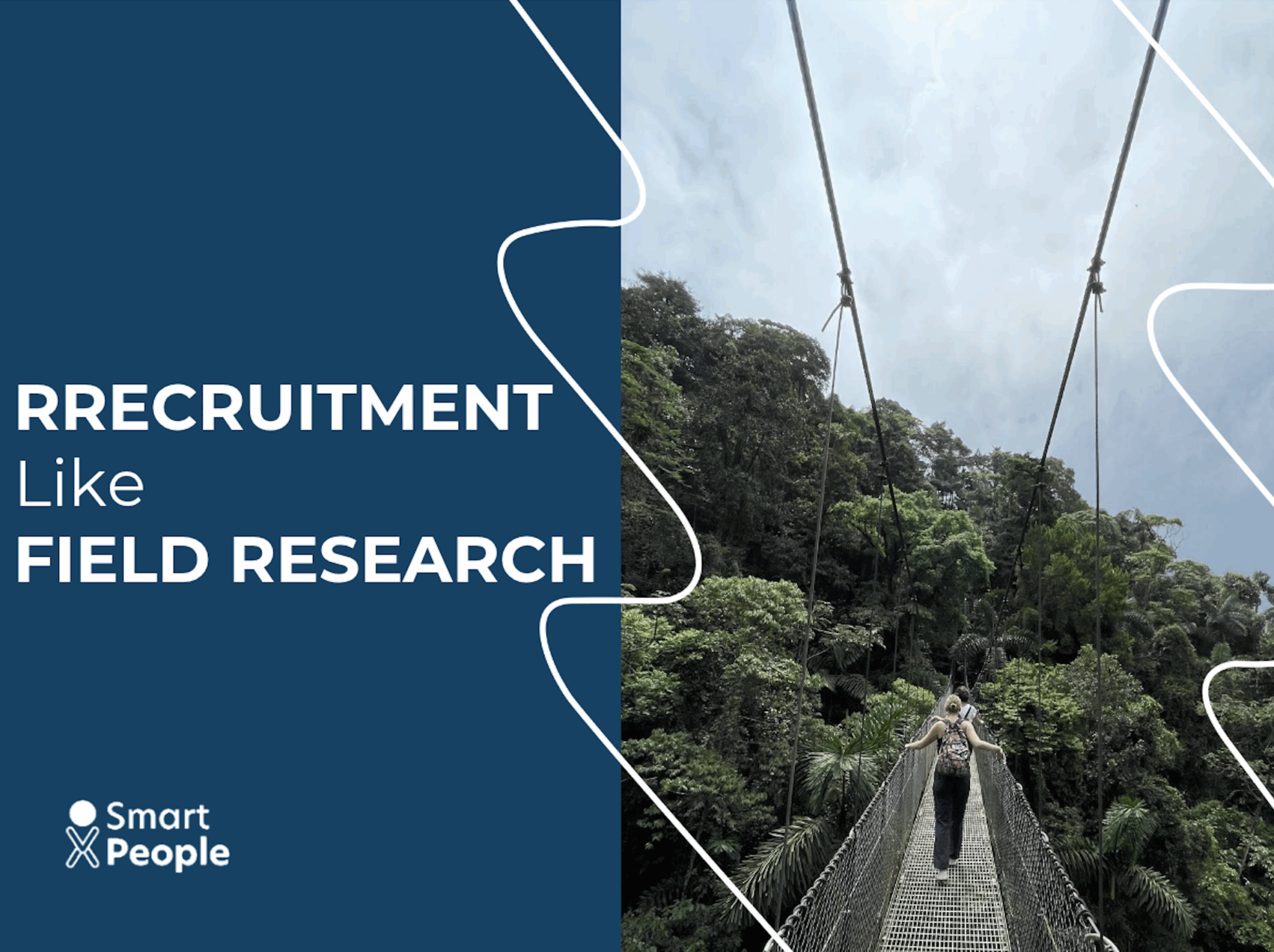
When I sat in the tropical rain in the middle of the Costa Rican jungle, watching a colony of leafcutter ants build their complex tunnels, I never imagined that this moment would shape how I recruit people at Smart People.
The Organizational Ecosystem: One Wrong Developer Can Disrupt the Whole System
In the jungle, every species has its role. Take away the jaguar, and the capybaras multiply too fast. Introduce an invasive plant, and local plants begin to die. It's simple but serious: one wrong element can create unpredictable problems.
The same is true in IT projects. A developer who can't work well with others isn’t just a "difficult person" — they can reduce the team's performance, cause conflicts that reach management, and delay project delivery. And that costs real money.
That’s why we don’t hire “rockstars” or “lone wolves.” We look for experts who know that their personal success depends on the success of the whole team.
KPIs as Signs of a Healthy Team
Biodiversity in the jungle isn’t just about the number of species — it’s about how stable and resistant the ecosystem is to changes. A recruitment team can also be very diverse, but without balance and self-regulation, that diversity turns into chaos.
That’s where KPIs (Key Performance Indicators) help. They're not just rigid metrics — they’re like natural balancing tools. Clear goals and measurable outcomes help each team member understand their role and see how they’re contributing to the project's success.
That’s why our KPI-based outsourcing model works. We don’t create unnecessary rules, but we set up clear systems where people can grow and clients stay in control.
Natural Selection: Business vs. Nature
Darwin probably didn’t think his ideas would apply to office life — but they do. In both the jungle and business, only the best-adapted survive.
The difference? Nature takes thousands of years to evolve. In business, we have only a few months. So we can’t afford to make bad hires or wait too long for someone to adapt. Everyone we place in a client team has to deliver results fast and be ready to change with the environment.
Symbiosis vs. Parasitism: Two Ways to Collaborate
In nature, there are two basic relationships:
- Symbiosis – both sides benefit.
- Parasitism – one side benefits while the other suffers.
In outsourcing, this difference is critical. We can be symbiotic partners — experts who not only do the work but help the client grow, share knowledge, and improve processes. Or we can be just “resources” — following orders, without really improving the system.
At Smart People, we choose the symbiotic model. Our teams aren’t just "loaned out" — they become part of the client’s structure and are fully responsible for the results.
Why Good Recruiters Should Think Like Anthropologists
In the jungle, sitting in the rain for hours, I learned to observe without judging — to see patterns, behavior, and reactions without rushing to conclusions.
That’s now a key skill in my recruitment process. I don’t look for perfect answers in interviews. I watch how candidates think, solve problems, and react to challenges.
Because we’re not hiring resumes — we’re hiring people who will work in complex, fast-moving projects for months. We need to know how they behave, not just what they say.
Organizational Microclimates: Why One Size Doesn’t Fit All
Every part of the jungle has its own “microclimate”: different humidity, temperature, and light. This affects which species can live there.
It’s the same with companies. A senior consultant might love the chaos of a startup but feel lost in a large, structured corporation. A fast-moving engineer might get frustrated in a slow, bureaucratic organization.
That’s why we don’t look for “the best” candidates. We look for the right match — people whose skills and working style fit our client’s environment.
Talent Management as Evolution
Evolution isn’t a straight line — it’s full of small experiments, constant changes, and learning what works.
We use the same idea in managing talent. Instead of planning someone’s whole career from the start, we focus on constant feedback, small improvements, and adjusting roles as project needs change.
That’s what our KPI-driven model is all about: living, flexible systems that grow and change with our clients.
Conclusion: From Bug-Watcher to Team Builder
In the jungle, I learned that the most successful systems share three things: clear rules, measurable outcomes, and self-regulation.
I use those same ideas now when building teams for Workday, SuccessFactors, and payroll projects. Every recruitment is like designing a small ecosystem — connecting talent, process, and business goals into one working system.
Because in the jungle or in business, the teams that succeed are the ones that can measure progress, adapt to change, and balance personal ambition with team success.
Sometimes, all it takes is one perfectly matched developer — and the whole project starts working like a Swiss watch.
Just like the ants taught me: true power lies in working together.
FAQ — Recruitment Inspired by Nature & KPI-Driven Team Building
What can business learn from nature about building teams?
Nature teaches us balance, interdependence, and the importance of every role in an ecosystem. Similarly, in business, each team member's contribution affects overall success. Hiring “rockstars” who don’t fit the team can disrupt efficiency and cause costly delays.
Why are KPIs important in recruitment and team management?
KPIs provide clear, measurable goals that help teams self-regulate and maintain balance. They reflect team health and effectiveness, helping everyone understand their role and contribution.
How does the KPI-based outsourcing model work at Smart People?
Our model focuses on clear performance indicators instead of rigid rules, creating an environment where experts can grow, and clients maintain full control over outcomes, ensuring responsibility and quality.
What is the difference between symbiosis and parasitism in outsourcing?
Symbiosis means mutual benefit through collaboration and shared growth, while parasitism is when one party benefits at the expense of the other. At Smart People, we choose the symbiotic model.
How does thinking like an anthropologist improve recruitment?
Observing candidates’ behaviors and problem-solving approaches — rather than just focusing on resumes — helps identify people who will thrive in complex, fast-paced projects and client cultures.
Why is matching a candidate’s work style to the organization’s “microclimate” important?
Just like different parts of the jungle support different species, companies have unique cultures and processes. Finding candidates whose skills and work style fit the environment increases engagement and project success.
If you want to learn more about building effective teams based on KPIs and natural collaboration principles, feel free to get in touch!
Get to know my approach and experience on LinkedIn: Zofia Pisańska
Have questions or want to discuss a potential collaboration? Use the contact form below — I’d be happy to connect!
GDPR Consent
By submitting this contact form, I consent to the processing of my personal data by Smart People for the purpose of responding to my inquiry, in accordance with the principles set out in the Privacy Policy and pursuant to Regulation (EU) 2016/679 (GDPR). Providing my data is voluntary, but necessary for this purpose. I have been informed of my rights to access, rectify, and request the cessation of processing of my data.