
Author: Katarzyna Kwiatkowska
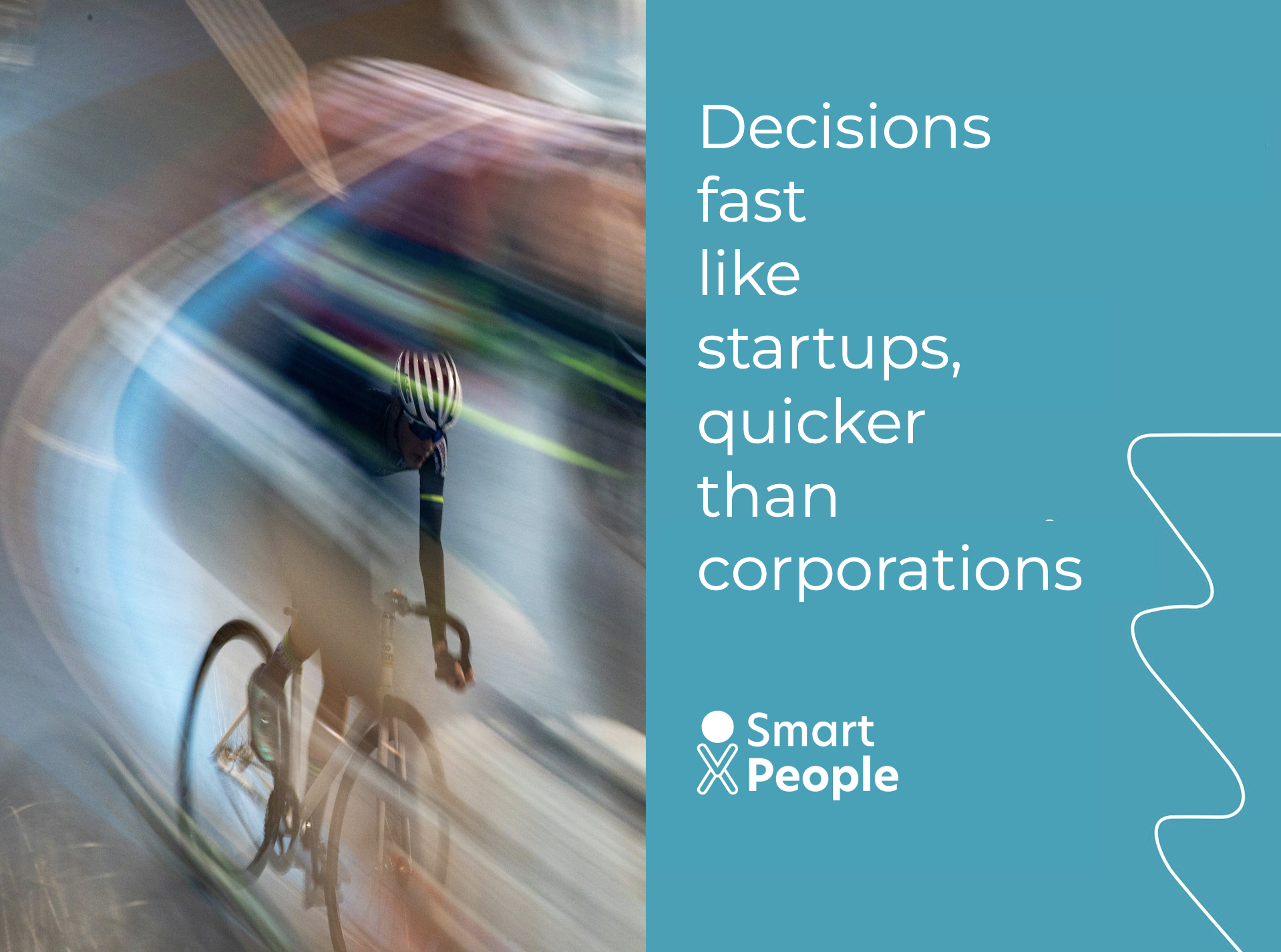
The meeting-free zone concept explains why the best startups accomplish in just one week what often takes corporations a full month. Imagine spending 4 hours in meetings just to decide on a small 15-minute change in communication. Six people sit in one room, twelve join a call, and three presentations happen — yet no clear decision is made. This scenario is common in many large companies. Meanwhile, startups test, measure, and implement changes rapidly, keeping their workflow agile and efficient.
Corporate offices are drowning in meetings — an average of 31 hours per month that employees spend on often ineffective gatherings (Atlassian, 2023) . However, startups build a culture focused on action by reducing meetings and using new tools for meeting reduction, startup time management, asynchronous communication, and work process automation. As a result, they achieve in a week what corporations often delay for months.
Why Do Meetings Dominate in Corporations?
Large companies usually have complex, dispersed structures with responsibilities shared across multiple teams. Meetings serve as a tool to avoid errors and reach compromises in such distributed environments. Unfortunately, this often slows down work and leads to what is known as "analysis paralysis," reducing effective time management not only in startups but also in bigger organizations. Therefore, consciously reducing meetings becomes crucial to improve decision-making speed and overall team efficiency.
"Bias Toward Action" vs. "Analysis Paralysis"
Startups generally prefer to "do and learn," emphasizing flexibility and smart time management. They test ideas step-by-step, using modern tools and automations to learn on the go and quickly apply improvements. This approach limits the risk of becoming stuck in lengthy decision processes that often result from too many meetings.
Conversely, many corporations are driven by fear of failure. Such a mindset causes repeated rounds of analysis, presentations, and alignment sessions. Since every decision requires multiple approvals, actions are often delayed, leading to frustration and lowered morale among teams.
Startup thinking: "It might not work, but we'll learn."
Corporate thinking: "What if it doesn't work?"
The True Cost of Every Meeting
| Parameter | Startup (6 people) | Corporation (50 people) |
|---|---|---|
| Daily hour-long meeting | 30h weekly | 250h weekly |
| Cost in FTEs | 0.75 person | 6.25 people |
| Opportunity cost | Entire features undeveloped | Entire projects on hold |
According to a Harvard Business Review study (2023) , companies that cut down the number of meetings by 50–70% saw their teams’ productivity grow by 25–35%.
Yet, meeting costs aren’t limited to lost work hours. They also include:
- Missed market opportunities due to delays,
- Greater risk of burnout and falling motivation,
- Disrupted focus and fragmented teamwork.
Consequently, an increasing number of organizations view reducing meetings as a strategic move to improve productivity, prevent burnout, and speed up implementation.
Tools and Principles That Replace Most Meetings
Exceptional startups transform traditional meetings into quiet periods focused on deep work. They establish meeting-free zones and rely on asynchronous communication alongside automation of workflows. Rather than a 4-person call at 10 AM, a quick message on Slack suffices, showing effective meeting reduction and time management. Similarly, hour-long meetings are replaced by Notion updates, and live presentations by brief Loom videos.
Furthermore, automation tools — such as AI-generated summaries, automated task creation, and smart scheduling with Reclaim.ai or Motion — allow teams to focus on actual work instead of discussions about work.
Startup Principles for Effective Meetings
- Only essential meetings are held, eliminating "meeting addiction."
- Meetings last no longer than 30 minutes.
- Every meeting has a clear agenda, goal, and documented notes.
- Decisions are made by the end of each meeting.
- Meetings must result in specific, actionable outcomes.
Startup vs Corporation: Anatomy of One Decision
| Days | Corporation (28 days) | Startup (3 days) |
|---|---|---|
| Day 1–3 | Competitive analysis | Founder says, "We're testing new pricing." |
| Day 4–7 | Product team meeting | Developer makes changes; we launch A/B test. |
| Day 8–14 | Preparation of management presentation | Results in hand, we implement improvements. |
| Day 15–18 | Presentation and feedback | |
| Day 19–25 | Legal review and compliance | |
| Day 26–28 | Implementation |
Scaling Startup Pace in Growing Organizations
Growing teams don't necessarily require more meetings. However, they do need better communication management and workflow automation. For example, practices like "meeting-free days" (such as "Meeting-Free Wednesday"), written status updates in Notion and Slack, AI bots generating summaries, and documenting communication preferences ("Manual of Me") help maintain a fast and focused working rhythm.
Introducing Cultural Changes and Addressing Transformation Barriers in Large Companies
Implementing cultural change in big organizations requires careful leadership and clear strategies. Important steps include:
- Diagnosing the current culture and identifying resistance points like fear of mistakes, bureaucracy, or lack of trust.
- Engaging leaders to actively promote proactive, transparent, and experimental mindsets.
- Providing training and communication initiatives to familiarize teams with new workflows and tools.
- Rolling out changes gradually through pilot projects and phased implementations.
- Defining clear roles and responsibilities with measurable objectives for meetings and processes.
- Monitoring progress regularly and adjusting strategies based on feedback.
- Celebrating wins to build motivation and reinforce commitment.
Adopting such models helps maintain startup-like culture even in larger firms, thus supporting effective reducing meetings and better time management practices.
(As supported by recent research from Korn Ferry, Spencer Stuart, and PZU — Poland's largest insurance company, 2024 — effective cultural changes are key to competitive advantage.)
Frequently Asked Questions
Why do startups make decisions faster than corporations?
Startups typically have simpler organizational structures, smaller teams, and foster a culture of trust and rapid action without excessive approvals. This allows them to move quickly, minimizing delays often caused by bureaucracy and multiple decision layers common in corporations.
What tools replace traditional meetings in a meeting-free zone?
Does eliminating meetings really increase team efficiency?
Yes. A 2023 study by Harvard Business Review found that companies reducing meetings by 50–70% experienced productivity improvements ranging from 25 to 35%. By minimizing unnecessary meetings, teams save time and reduce cognitive fatigue.
Can startup principles for fast decision-making work in large corporations?
Absolutely. The key to adopting startup speed lies not in company size, but in organizational culture and workflow design. Implementing clear decision-making frameworks, reducing bureaucracy, embracing a meeting-free zone culture, and automating routine tasks enable even large companies to increase agility and speed.
What exactly is a meeting-free zone?
A meeting-free zone refers to designated periods or cultural practices within an organization where meetings are minimized or eliminated. This allows employees to focus on deep work, reduces interruptions, and promotes asynchronous communication to maintain productivity without constant synchronous meetings.
How can companies effectively start reducing meetings?
Companies can start by enforcing clear agendas and objectives for all meetings, limiting meeting durations (ideally to 30 minutes), prioritizing asynchronous updates over synchronous calls, introducing meeting-free days or zones (e.g., “Meeting-Free Wednesdays”), and leveraging workflow automation tools to take routine discussions off the calendar.
What are common barriers to adopting meeting reduction in corporations?
Common barriers include fear of failure, bureaucratic inertia, lack of trust in asynchronous communication, dependency on hierarchical approvals, and entrenched meeting habits. Overcoming these requires leadership commitment, cultural change initiatives, and clear communication about benefits and expectations.
Time for Revolution
In today’s digital and AI-driven world, it’s not the number of hours spent in meetings that counts, but the speed and quality of decisions and execution. Companies that foster a meeting-free zone culture, minimize meetings, and rely on automation will gain a competitive edge while maintaining startup agility even at scale.
Is your organization ready for the meeting-free revolution?
If you want to maintain startup speed without drowning in endless meetings and administration — let's talk!
At Smart People, we help companies create efficient processes that grow with their business: no unnecessary meetings, clear structure, and measurable results.
GDPR Consent
By submitting this contact form, I consent to the processing of my personal data by Smart People for the purpose of responding to my inquiry, in accordance with the principles set out in the Privacy Policy and pursuant to Regulation (EU) 2016/679 (GDPR). Providing my data is voluntary, but necessary for this purpose. I have been informed of my rights to access, rectify, and request the cessation of processing of my data.