
I talk to a lot of HR and operations people and after some time you realise it's basically the same story over and over again. Different company, different logo, same ending.
A few weeks ago I sat with an HR Director from a German Mittelstand company. Solid business, well run, no shortcuts. They moved from SAP HCM to SuccessFactors about two years ago and the project was done well. Really well. Everything where it should be.
So I asked a simple thing. How much of the system do you actually use today?
She paused and said maybe 40%.
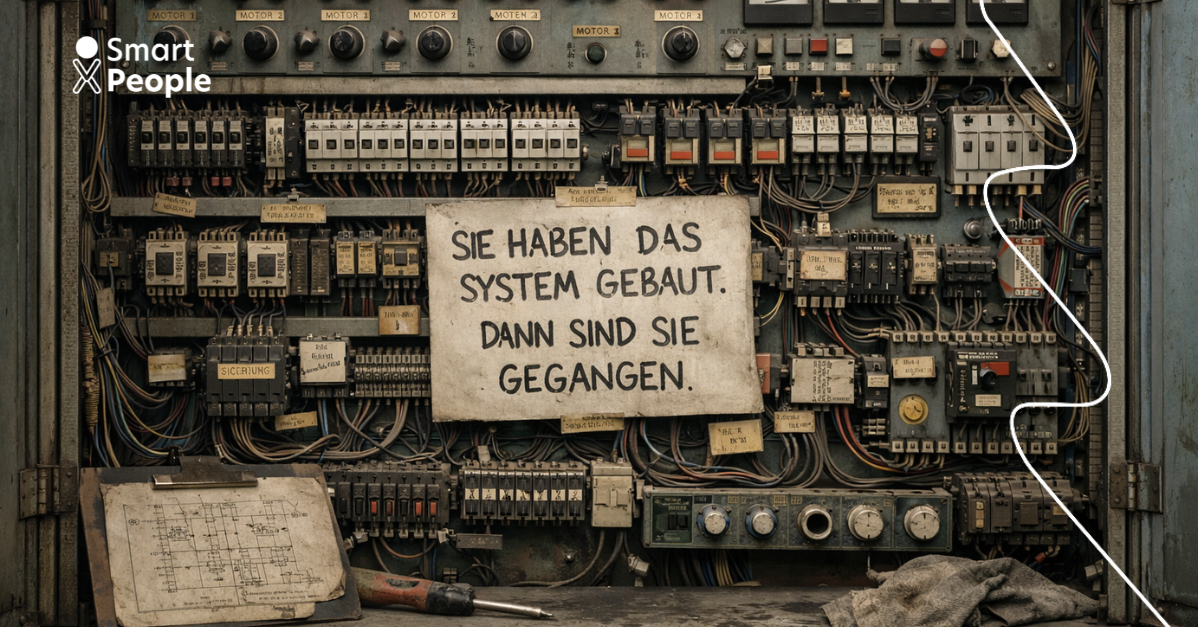
Then she added, almost like it doesn't matter, the consultant who built it left and most of what he knew left with him. That sentence comes back more often than it should.
Because here's the thing. German companies are very good at doing projects properly. Planning is solid, rollout is clean, people take it seriously. Up to go-live it's almost textbook. After go-live, it's a different game.
What "Fine" Actually Looks Like
The system is there. It works. People log in, processes run, nothing is visibly broken. From the outside everything looks fine. Inside, no one really knows how it's put together. No one feels comfortable changing anything. So nobody does. For a while, it holds. Someone becomes the person who "sort of knows". People go to them with everything. The system keeps going, good enough.
Until something changes. And it always does.
A process needs to be updated, something needs to be switched on, or that one person leaves. That's the moment when it becomes obvious. The knowledge was never yours. It was just around.
This is not a SuccessFactors problem. The system is fine. The problem is ownership.
The Fachwissen Gap
In Germany there is real respect for expertise. Fachwissen matters. People take it seriously. But in HR tech, that thinking often stops exactly where the project ends. There's an assumption that once the system is live, the organisation will somehow absorb the knowledge. It doesn't work like that.
Knowledge doesn't stay because people were present. It stays because someone made a decision to keep it and built it inside the team. Most companies don't make that decision. They plan the project in detail. What happens after is assumed.
Who really owns the system later on? Who can change things without hesitation? Who teaches the next person? Who actually understands what's going on and what's just a workaround? Those questions usually come back two years later, not at the start.
The Hidden Cost
By then the cost is already there. It just doesn't show up as a line item. You see it in slower processes, in decisions made without data that already exists, in features that were paid for and never used. You feel it in the team. Something is off, but no one can clearly explain why.
The Decision That Changes Everything
I've seen companies avoid this. The difference is not complicated. They make one decision early. Knowledge is not something we borrow, it's something we own. Not one person who kind of knows things, but real understanding inside the team. People who can work with the system, change it, explain it, push back when something doesn't make sense.
A Simple Rule That Works
One company I worked with had a simple rule before go-live. Every configuration had to be written down and at least two people internally had to be able to explain it from scratch. At the time it felt like extra work. Three years later they haven't called their implementation partner once.
That's not luck. That's a decision.
The Real Purchase
Most companies think they bought a system. What they actually bought is a dependency. And they only notice it when the person who holds it together walks out.
Still Running on Borrowed Knowledge?
If this sounds familiar — let's talk about what real system ownership looks like in practice.
Get in TouchGet in Touch
Piotr Ławrynowicz
VP Strategic Growth, Smart People
Email: piotr.lawrynowicz@smartpeople.com.pl
LinkedIn: Connect on LinkedIn